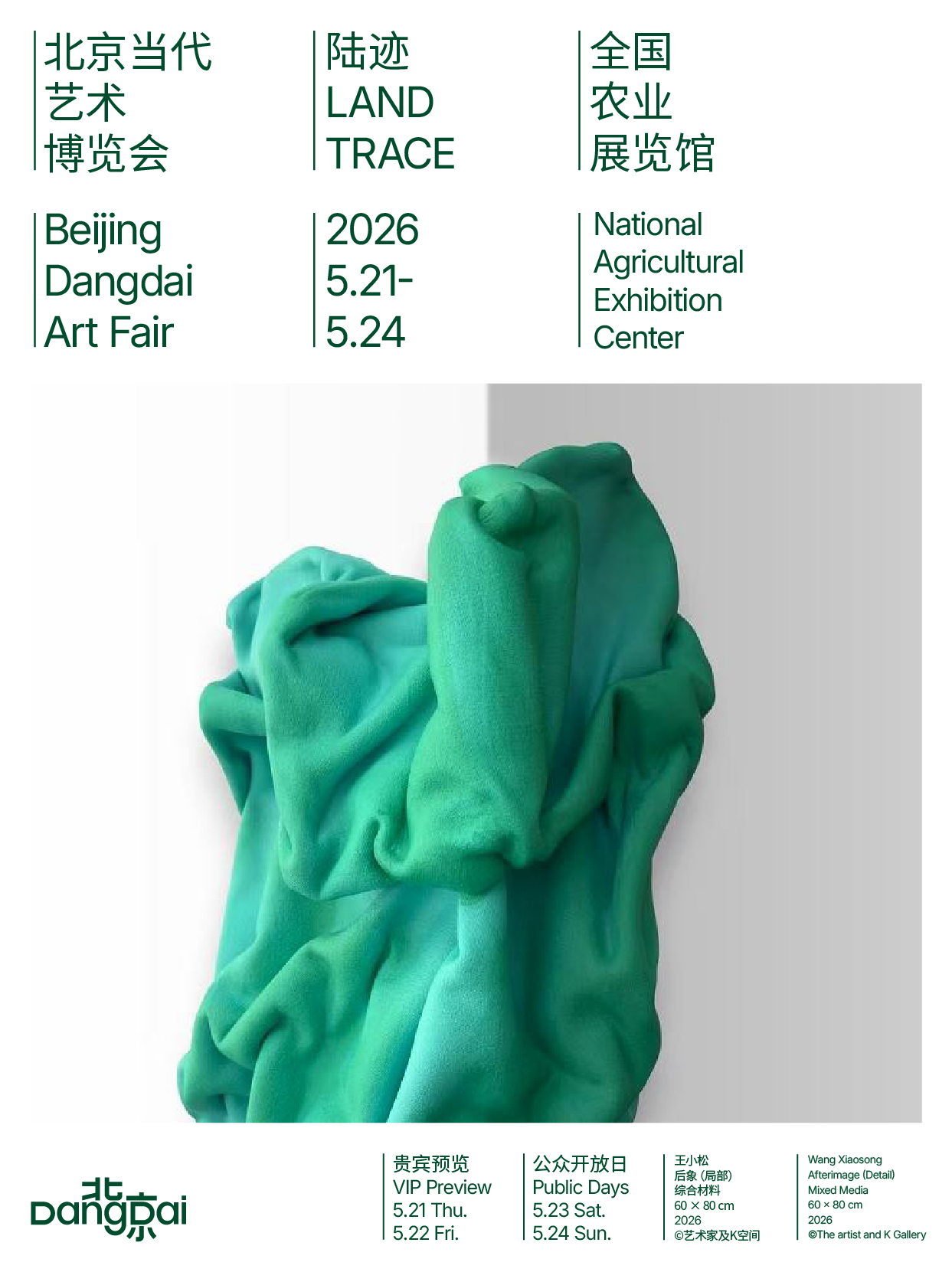
Beijing Dangdai Art Fair 2026 Artwork Poster | Wang Xiaosong, Afterimage, K Gallery
Beijing Dangdai Art Fair 2026 will take place from May 21 to 24 at Hall 11 of the National Agricultural Exhibition Center, with May 21 to 22 as VIP Preview Days and May 23 to 24 as Public Days. Under the theme “LAND TRACE,” this year’s edition re-examines cultural differences and uneven experiences through the lens of geography and historical geography across multiple contexts, further delineating the detailed landscape of contemporary art amid a moment of value reshaping.
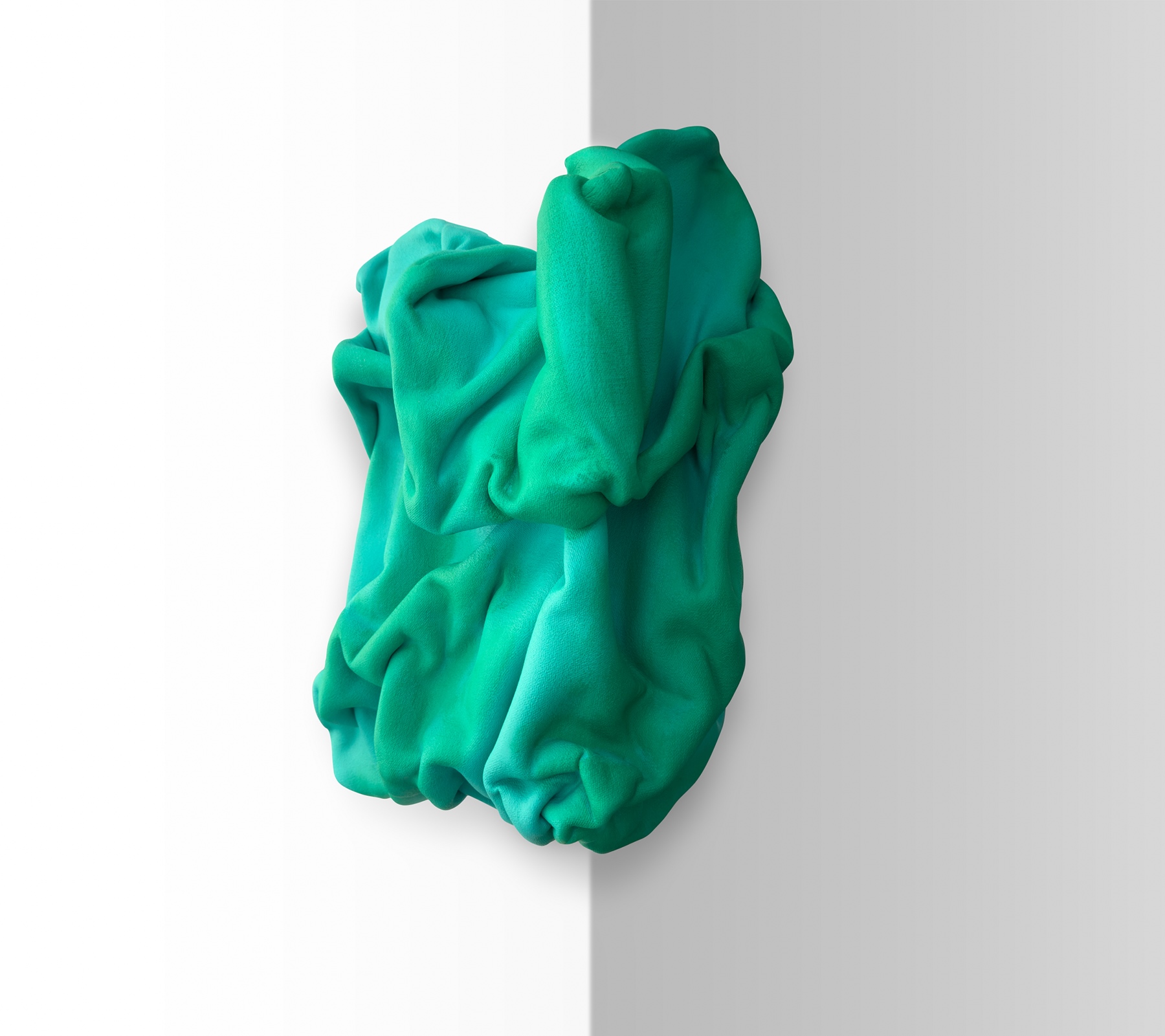
We will be releasing a series of posters centered on works featured at the Fair. These works not only offer possible interpretations of and responses to “LAND TRACE,” but also serve as preview highlights of key artworks and participating institutions. The poster shared in this edition features a sculptural work by artist Wang Xiaosong from K Gallery, which integrates material, time, and tactility through the language of “folds.”
About the Artwork
Wang Xiaosong
Afterimage
Mixed media
2026
60 × 80 cm
©Courtesy of the artist and K Gallery
In Wang’s works, we can capture the order and value of painting and grasp the creative expression. He absorbed elements from classical art, and emphasized order, symmetry and rhythm through highlighting visual entanglement, conflict and the harmonious unity of opposites.
Wang Xiaosong believes that a good painting can evoke tactility, sense of embrace and spiritual shock, prompting us to interpret the cultural connotation contained within from a new perspective. He has emphasized many times that multi-dimensional painting is a new exploration of curved space that cannot be expressed on a flat surface. This is an inverse expression of the points, lines, planes and their corresponding axioms of Euclidean geometry in curved space. Through spatial changes in materials, touch, direction, light and shade, color, proportion, texture and other factors, the dynamics and plasticity of painting are demonstrated. In Wang Xiaosong’s works, on the one hand, he pursues the ultimate aesthetic principles, which he has always advocated and insisted on; on the other hand, we can see that Wang’s paintings are dual-sided and multi-faceted, presenting contradictory entanglement and criticality. This complex visual interactivity constitutes Wang Xiaosong’s unique artistic style.
About the Artist
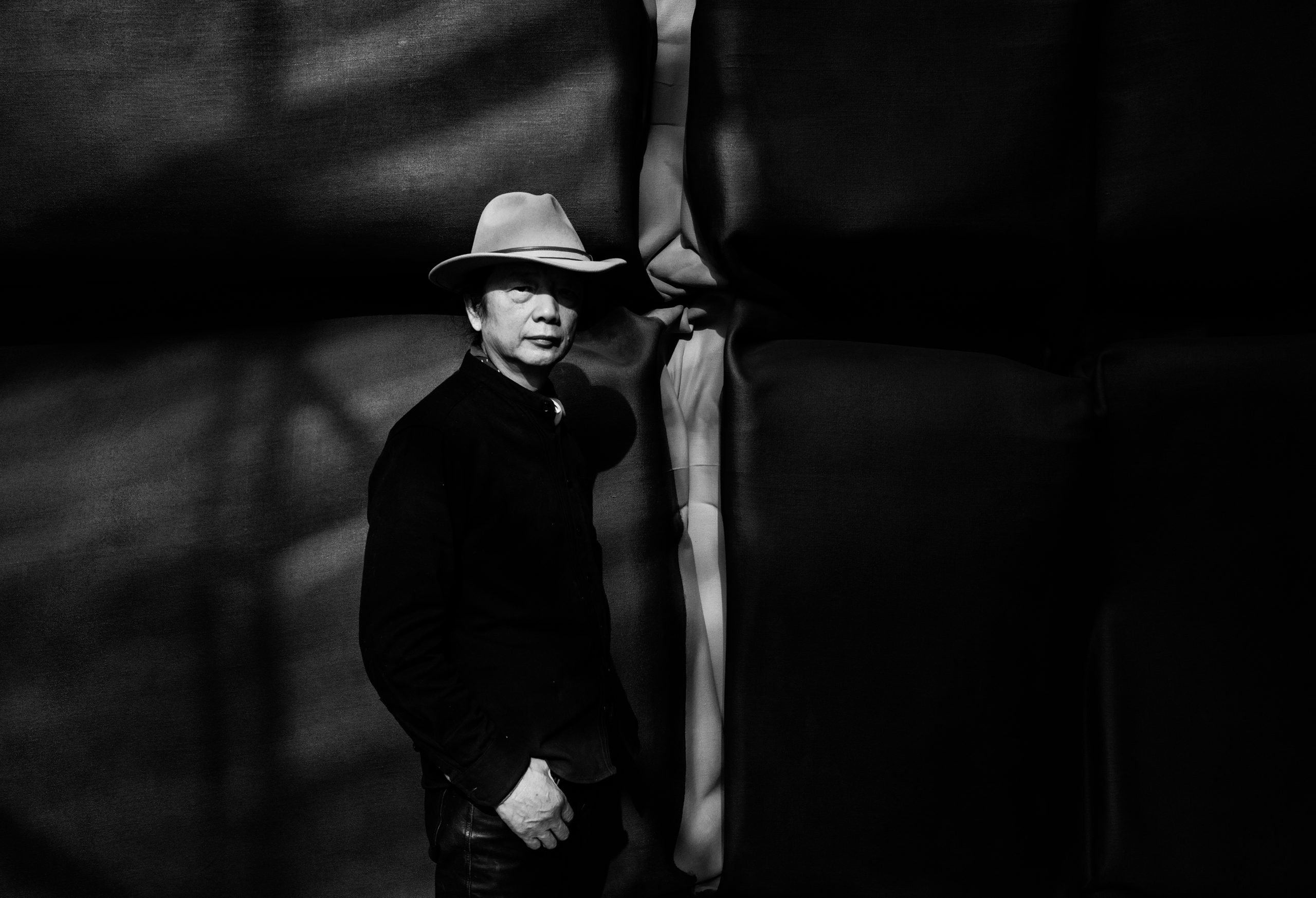
Portrait of Artist
©Courtesy of the artist and K Gallery
Wang Xiaosong is an artist. He studied at the Berlin University of the Arts in Germany in his early years and received the degree of Meisterschüler. He is currently a Professor and Doctoral Director at Zhejiang University. He also serves as a Member of the National Steering Committee for Professional Master’s Degree Education in Design, Ministry of Education, P.R. China; a Member of the National Steering Committee for Art Major Examinations and Admissions in Higher Education Institutions, Ministry of Education, P.R. China; Director of the Institute of Contemporary Art and Design, Zhejiang University; and Deputy Director of the Laboratory of Art and Archaeology Image, Zhejiang University, under the Philosophy and Social Sciences Laboratory of the Ministry of Education. He has led major projects including a Major Project of the National Social Science Fund of China and projects supported by the National Arts Fund of China, and has published numerous papers in SCI and CSSCI journals.
Wang Xiaosong has long been committed to the integration of art and interdisciplinary practice, and is one of the representative Chinese artists who studied in Germany in the post–Reform and Opening-up era. As an internationally active contemporary artist, he served as Curator of the China Pavilion at the 60th International Art Exhibition of La Biennale di Venezia, and as Chief Curator of the touring exhibition Compilation of Classics in the Flourishing Age—A Comprehensive Collection of Ancient Chinese Paintings, while also organizing a number of exhibitions with broad international influence. He has held solo exhibitions at major venues including Palazzo Medici Riccardi in Italy, Museum Ludwig Koblenz and Kunsthalle St. Annen Museum in Germany, and Künstlerhaus Wien in Vienna. He has also participated in major international exhibitions such as the Fiber Art Triennial, the Chengdu Biennale, the Wuhan Biennale, the Beijing Biennale, and NordArt 2022 in Germany. His works are held in the collections of numerous museums and institutions, including the Royal Family of the United Arab Emirates, Schütz Fine Art Collection in Austria, Künstlerhaus Wien, the Barwell Art Foundation, Museum of Contemporary Art Ludwig Koblenz, Kunsthalle St. Annen Museum, the Guangdong Museum of Art, the Art Museum of Sichuan Academy of Fine Arts, the Larissa Contemporary Art Centre in Greece, Yinru Vihara, and the Zhejiang Art Museum.